It usually happens at the worst possible moment. You slide into the driver’s seat in a Dubai car park, turn the key, and instead of that familiar engine roar you hear a slow, tired click. Your battery is flat. If you own a charger, the very next question is simple: how long do I actually leave this thing plugged in?
After years of reviving dead batteries across the city, I can tell you the honest answer is it depends. But “it depends” doesn’t help you when you’re stranded. So let me break it down the way I explain it to customers on-site, with real numbers you can trust.
The Short Answer
For a normal car battery (around 50Ah), here is roughly how long a full charge takes based on your charger’s amp rating:
| Charger Output | Time to Fully Charge a Flat Battery |
|---|---|
| 2 amps (trickle) | 24–48 hours |
| 6 amps | 8–12 hours |
| 10 amps | 4–8 hours |
| 20 amps | 2–3 hours |
If your battery is only half-drained rather than fully dead, cut those times roughly in half. That’s the quick version. Now let’s understand why these numbers move around, so you can charge safely instead of guessing.
What Actually Decides Your Charging Time
Three things control how long you’ll wait, and once you understand them the whole process stops feeling like a mystery.
Your charger’s amps. This is the biggest factor. Amps are the speed of the charge. A low-amp charger is gentle but slow, while a high-amp charger is fast but needs more care. Think of it like filling a bucket with a thin hose versus a wide one.
How empty the battery is. A battery that’s slightly low fills up quickly. A battery that’s completely dead takes far longer, because there’s much more energy to put back.
The battery’s size and health. A big SUV or 4×4 battery holds more energy than a small sedan battery, so it naturally takes longer. And an old, worn battery may never reach a proper full charge no matter how long you wait.
Charging Time By Amp Rating
Here’s how each common charger behaves in real life.
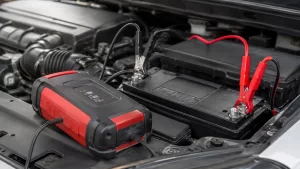
2-amp chargers (trickle/maintenance). These are the slow-and-steady option. A dead battery can take a full 24 to 48 hours, and a partly drained one around 12 to 24 hours. They’re not meant for emergencies, they’re meant for keeping a healthy battery topped up. This is the gentlest choice and it’s very hard to damage a battery this way.
6-amp chargers. A solid middle ground. Expect roughly 8 to 12 hours for a flat battery, making this a good overnight option for most drivers.
10-amp chargers. The most popular home choice. A typical car battery charges in about 4 to 8 hours. Fast enough to be useful, gentle enough to be safe for regular use.
20-amp (and higher) chargers. These pump energy in quickly, often reaching a usable charge in 2 to 3 hours. They’re powerful, but they also generate more heat, so I only recommend them with a smart charger that shuts off automatically. In Dubai’s climate, heat management matters more than most people realise.
A quick rule of thumb technicians use: divide the battery’s capacity (in Ah) by the charger’s amps, then add about 10–20% because charging is never perfectly efficient. A 50Ah battery on a 10-amp charger is roughly 5 hours plus a little extra.
What Is Trickle Charging, and Should You Use It?
A trickle charger delivers a very small current, usually between 0.5 and 2 amps. It won’t rescue you in a hurry, but it’s brilliant for a car that sits unused. Many Dubai residents travel for weeks in summer and come back to a dead battery simply because the car sat idle in the heat.
A trickle or smart maintenance charger keeps the battery full during that time and helps prevent long-term damage. If your vehicle regularly sits for long stretches, this is one of the smartest, cheapest habits you can build.
Manual vs Smart Chargers: Which Should You Use?
Not all chargers are equal, and the type you own changes how carefully you have to watch it.
A manual charger pushes a steady current until you unplug it. It’s simple and cheap, but it doesn’t know when to stop, so leaving one connected too long can overcharge and overheat the battery. If you use a manual charger, set a timer and check on it.
A smart charger (also called an automatic or intelligent charger) reads the battery as it works. It adjusts the current, then switches to a gentle maintenance mode once the battery is full. For most drivers in the UAE, a smart charger is the safer, more convenient choice, plug it in, walk away, and let it handle the rest. Given how much our heat punishes batteries, the automatic shut-off alone makes it worth the extra cost.
If you’re buying a charger, look for one rated for your battery type. Standard, EFB, and AGM batteries have slightly different charging needs, and a good smart charger will have settings for each.
Does Driving Charge the Battery?
Yes, but with limits. Once your engine is running, the alternator recharges the battery as you drive. A 20 to 30 minute run at highway speeds can meaningfully top up a moderately drained battery. Short trips around the block or idling in traffic barely help, and stop-start Dubai traffic can actually leave a weak battery worse off.
If your car won’t start at all, driving isn’t an option yet. That’s when a quick jump start service in Dubai gets you moving again, so the alternator can do its job on the drive home.
How to Know When It’s Fully Charged
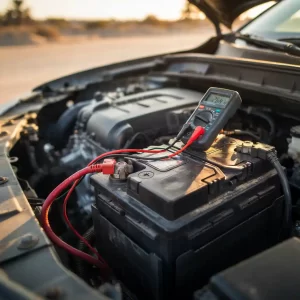
The cleanest way is a voltmeter. A rested, fully charged battery reads about 12.6 to 12.7 volts with the engine off. Most modern smart chargers make this even easier by showing a full indicator and switching to maintenance mode automatically once the job is done.
If you’ve been charging for well over 24 hours on a decent charger and the battery still won’t hold voltage, that’s a red flag. It usually means the battery itself has failed rather than simply gone flat.
Charging Safely in Dubai’s Heat
Our climate is genuinely tough on batteries, so a few safety habits matter here more than in cooler countries:
- Charge in a shaded, ventilated spot, never in direct sun or a sealed hot garage.
- Use a smart charger that stops automatically to avoid overcharging and overheating.
- Never charge a battery that looks swollen, cracked, or is leaking. Stop and replace it.
- Connect positive first, then negative, and keep sparks and flames well away.
When Charging Won’t Help, and You Need a New Battery
This is the part people don’t want to hear, but it saves money in the long run. Charging only works if the battery is fundamentally healthy. Replace it instead of charging if:
- It reads below about 10.5 volts even after a long charge.
- It drains again within a day or two of charging.
- It’s more than 3 years old (very common in the UAE, where heat shortens battery life to just 2–3 years).
- The case is bloated, leaking, or the terminals are heavily corroded.
If any of those sound familiar, charging is only buying you a few days. A proper car battery replacement in Dubai is faster, safer, and cheaper than being stranded again. You can also buy a new car battery online and have it delivered and fitted at your location.
Frequently Asked Questions
Can I leave a charger connected overnight?
With a modern smart or trickle charger, yes. It switches to maintenance mode once full. With an older manual charger, don’t leave it unattended for long periods.
How long does a jump start last?
A jump start only gets the engine running. You then need to drive for 20–30 minutes or charge the battery properly so it can hold power again.
Is it bad to charge a battery quickly?
Fast charging is fine occasionally with the right charger, but repeated high-amp charging shortens battery life. Slow and steady is healthier.
My battery charges but dies overnight. Why?
That’s a classic sign of a failing battery or a drain in the car’s electrical system. It needs testing rather than more charging.
The Bottom Line
How long you charge a car battery comes down to your charger’s amps and how flat the battery is: anywhere from 2 to 3 hours on a strong charger to a full day or two on a trickle charger. Charge in the shade, use a smart charger, and watch the voltage.
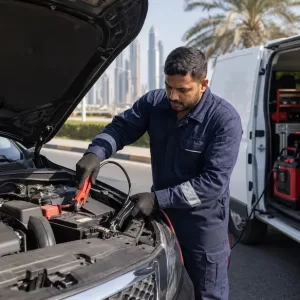
And if the battery keeps letting you down no matter how long you charge it, don’t keep fighting it. Book a mobile battery service and our team will test it, and if needed replace it right where you are, anywhere in Dubai, in about 15 minutes.